Finland
Private Islands for Sale in Finnish Lakeland
Finnish Lakeland is the interior lake district that fills much of southern and eastern Finland — a landscape of interconnected freshwater lakes, long shorelines and thousands of forested islands. Island ownership here is an ordinary part of the cabin culture rather than a luxury niche, which is why it attracts researchers looking at the more accessible end of the European market.
This page is a market guide, not an inventory list. We do not publish speculative listings; if you tell us what you are looking for, your inquiry is directed to owners, brokers and professionals active in the region.
Where Finnish Lakeland is and what it looks like
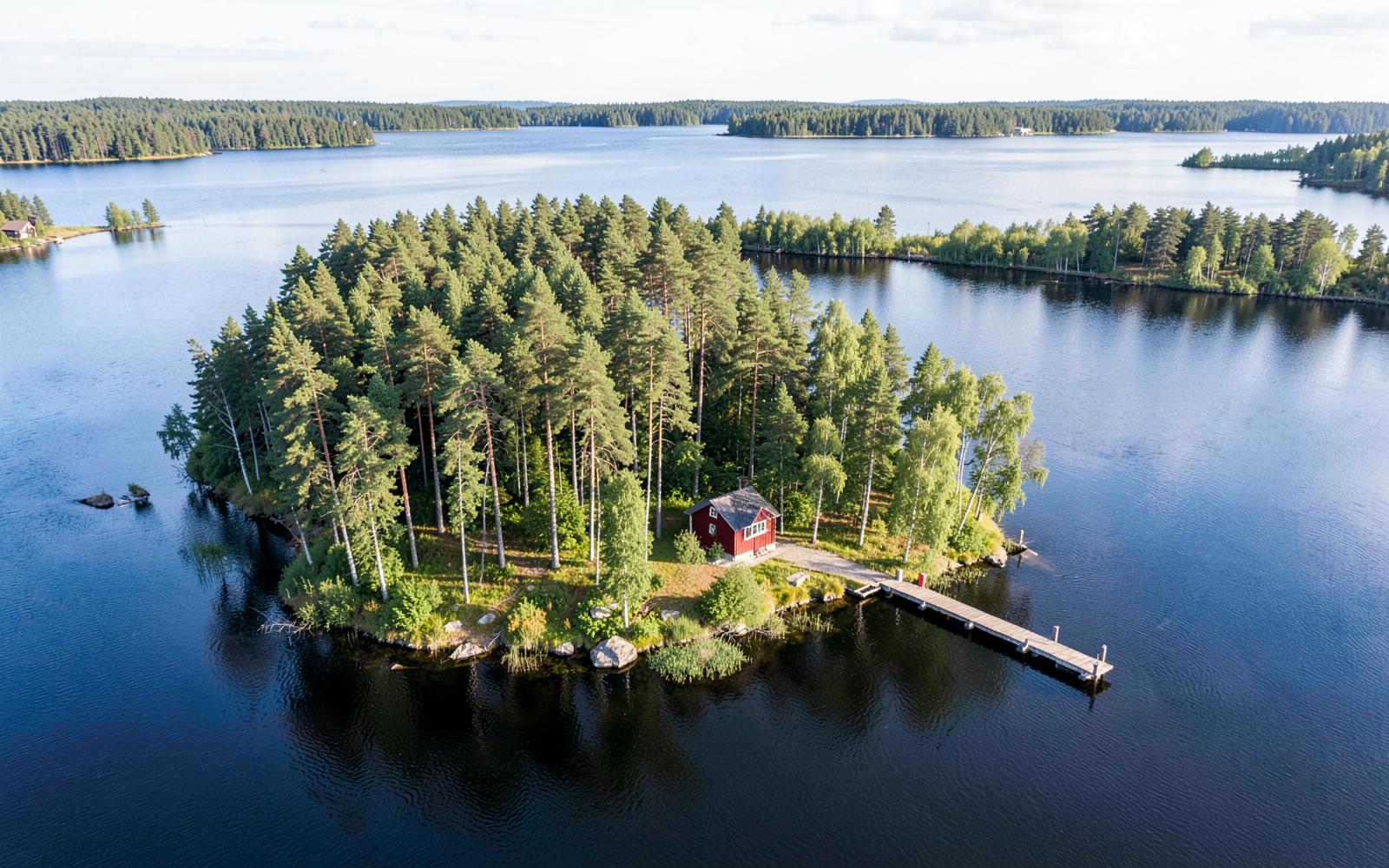
The lake district sits inland from the Baltic coast and spreads across the Saimaa, Päijänne and surrounding lake systems. Islands range from bare rock outcrops with a few pines to substantial wooded holdings with their own bays and sheltered landing points.
Almost everything here is glacially shaped: shallow soil over granite, softwood forest, and irregular shorelines that create natural shelter. Water is fresh, which changes the practical picture considerably compared with coastal or tropical markets — no salt corrosion, but a hard freeze every winter.
What kinds of islands exist
| Type | What to expect |
|---|---|
| Bare forested island | No structures, no services. Value driven by shoreline, shelter and buildability. |
| Traditional cabin island | A timber cabin and a lakeside sauna, usually seasonal, often off-grid. |
| Modernised island | Insulated building, treated water, sometimes a cable connection to grid power. |
Access: boat, road-to-shore and ice
Access is a two-part question in Lakeland. The first part is the crossing itself, which is normally short and made by open boat from a mainland landing. The second part — and the one buyers underestimate — is how you reach that landing by road, whether there is somewhere to leave a car, and whether the shore point is privately controlled or shared.
In deep winter the lakes freeze and travel patterns change. During freeze-up and break-up neither boat nor ice is dependable, so most owners plan around a warm-season pattern of use unless the property is specifically set up otherwise.
Utilities and off-grid ownership
- Many island cabins run entirely off-grid on solar, battery and a backup generator
- Water is commonly drawn from the lake and treated; ask what treatment is installed and whether it is winterised
- Wastewater rules for shoreline properties are a genuine due diligence item, not a formality
- Heating is typically wood-based, with electric backup only where a cable connection exists
- Mobile coverage is often usable, but confirm on site rather than assuming
Cabins, saunas and development
A lakeside sauna is a normal part of a Finnish island property and is often the oldest structure on it. What matters for a buyer is whether the existing buildings are lawfully established and what, if anything, may be added or replaced.
Shoreline building is regulated at municipal level and rules vary between municipalities. Treat any assumption about extending, rebuilding or adding a second cabin as unverified until the local authority confirms it in writing.
Seasonality
The usable season is short and intense. Long daylight through midsummer is the reason most owners buy here; the trade-off is a long winter in which an unheated cabin sits closed and access is uncertain for weeks at a time.
Due diligence checklist
- Confirm the boundary and whether the whole island is included in the title
- Verify that every structure is lawfully established, including the sauna and any jetty
- Establish the mainland access point, parking and any right of way over shore land
- Check the wastewater system against current shoreline requirements
- Ask about winter servicing: who checks the property, and how they reach it
- Confirm whether power is grid-connected by cable or fully off-grid
Who this market suits
Buyers who want a quiet freshwater retreat with a genuine cabin tradition behind it, who are comfortable with seasonal use, and who do not need year-round services on the island itself.
Frequently asked questions
Are Finnish Lakeland islands usually developed?
Both developed and bare islands appear. A traditional cabin with a lakeside sauna is the most common configuration, but undeveloped forested islands also come to market.
Can you use a Lakeland island in winter?
Some properties are equipped for it, but most are seasonal. Access is unreliable during freeze-up and break-up, and unheated timber cabins are generally closed for the winter.
Is grid power available on island properties?
Sometimes, via a submarine cable, but off-grid solar with generator backup is very common. Confirm which applies before planning any mechanical systems.
Are there restrictions on who can buy?
Acquisition and reporting requirements can apply in some cases and change over time. Verify current requirements with a Finnish lawyer before committing rather than relying on general summaries.
Other island markets in Finland
Related buying guides
Keep exploring
Continue with the Finland country overview. You can also browse private islands in Finland, private islands in Scandinavia, lake islands, islands under $500,000 and islands under $1 million.