Region
Private Islands for Sale in Europe
Europe's private island market splits into two very different halves. In the Mediterranean, islands are scarce, heavily regulated and closely tied to heritage and coastal protection rules. In the Nordic countries, small forested islands are plentiful, comparatively affordable and part of a long-established cabin culture.
Permitting is the central theme across both. European planning systems are generally strict about new construction on islands, and existing legal buildings often carry disproportionate value. Buyers who begin with the planning file rather than the photographs tend to make better decisions here.
Countries in this region
Market overview
| Country | Typical setting | Ownership | Access |
|---|---|---|---|
| Greece | Ionian and Aegean islets, many within sight of inhabited islands | Freehold; archaeological and coastal rules are significant | Ferries and regional airports with private boat transfer |
| Croatia | Adriatic islets along the Dalmatian coast | Freehold; some categories of buyer face additional approvals | Short boat transfers from well-served coastal marinas |
| Italy | Lagoon islands, Tuscan archipelago and lake islands | Freehold; heritage and conservation constraints are common | Excellent mainland infrastructure with short crossings |
| Finland | Thousands of lake and archipelago islands | Freehold; cabin ownership is a mainstream market | Boat in summer, ice or snowmobile access in winter |
| Sweden | Stockholm archipelago and inland lakes | Freehold; shoreline protection rules limit new building | Frequent boat routes near Stockholm and Gothenburg |
| Norway | Coastal skerries and fjord islands | Freehold; concession and use rules can apply | Boat access along a highly developed coastal network |
Ownership and title
- Freehold ownership is standard across the European Union, and EU nationals generally face no additional restriction.
- Non-EU buyers may face additional approval steps in certain countries, and rules differ by jurisdiction.
- Coastal zones, archaeological protection and Natura 2000 designations frequently limit building rights.
- Some islands are wholly or partly protected, meaning ownership carries stewardship obligations rather than development potential.
What drives price
- Existing building permits and legalised structures, which dominate value in the Mediterranean
- Proximity to a port, marina or ferry route and the reliability of that connection
- Protected-area status and the resulting construction limits
- Water supply, which is scarce on many Mediterranean islets and abundant in the Nordics
- Season length and rental potential where permitted uses allow it
Developed vs undeveloped
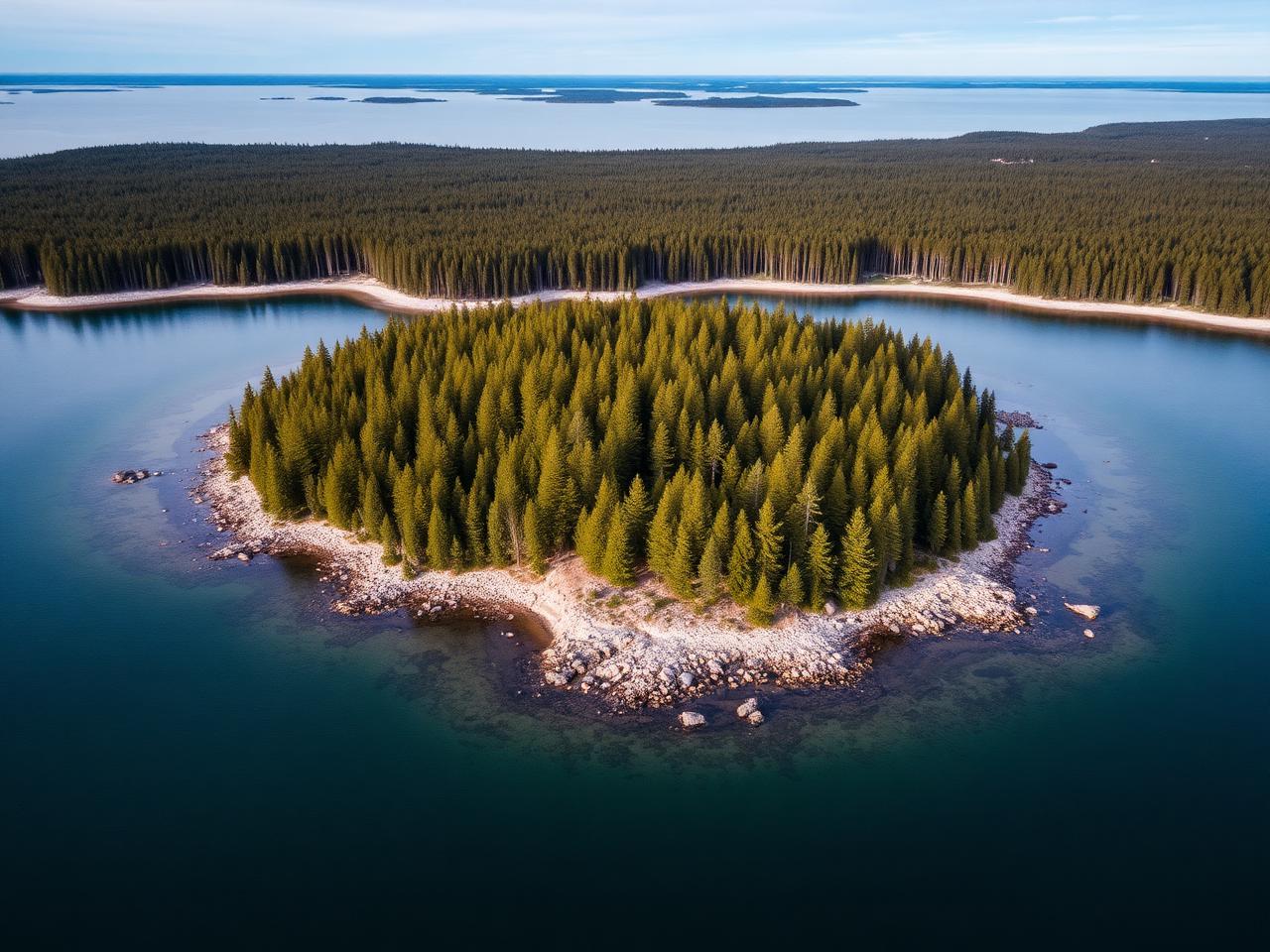
- Nordic islands are often sold with a modest cabin, sauna and jetty already in place, and the permitted footprint is usually well documented.
- Mediterranean islands are more likely to be undeveloped or to carry older structures whose legal status must be verified.
- Restoration of an existing legal building is frequently a faster route to occupancy than seeking consent for a new one.
Access and logistics
- Ferry and marina connections define practical usability in Greece, Croatia and Italy.
- Nordic islands are typically reached by small boat in summer, and winter access depends on ice conditions.
- Grid connections by submarine cable exist in parts of Scandinavia and the Adriatic and add substantial value where present.
- Building seasons in northern Europe are short, so construction is often planned across several years.
Island types found here
Related guides
Frequently asked questions
Are European private islands cheaper than tropical ones?
Nordic islands are often the most affordable islands in any established market, while Mediterranean islands are among the most expensive because supply is very limited.
Can you build freely on a European island?
Rarely. Most European jurisdictions apply strict coastal and environmental planning rules, and an existing legal building is usually more valuable than raw development potential.
Do non-EU buyers face restrictions?
Requirements vary by country and by buyer nationality, and can include additional approvals. Confirm the current rules with a local lawyer for the specific jurisdiction.